Definition
Your undertone is the subtle hue beneath your skin’s surface (warm, cool, neutral, or olive). It doesn’t change with a tan.
TL;DR
- Use daylight and minimal makeup.
- Combine 2–3 tests; don’t rely on just one.
- If you’re stuck between warm and cool, you may be neutral or olive.
Test 1: Jewelry (gold vs silver)
- Gold looks better → often warm
- Silver looks better → often cool
- Both look good → often neutral
Test 2: White paper test
Hold pure white paper next to your face in daylight.
- Skin looks more pink/rosy → cool
- Skin looks more yellow/golden → warm
- Skin looks more green/gray → olive
Test 3: Vein color (use carefully)
This test can help, but it’s easy to misread depending on lighting.
- veins appear blue/purple → cool (maybe)
- veins appear green → warm (maybe)
Lighting changes this a lot, so treat it as a weak signal.
Olive undertone (why it’s confusing)
Olive undertones can read warm or cool depending on lighting and what you’re wearing.
Common signs:
- you look “off” in both very warm yellows and very cool icy pastels
- some foundations look too pink, others too yellow
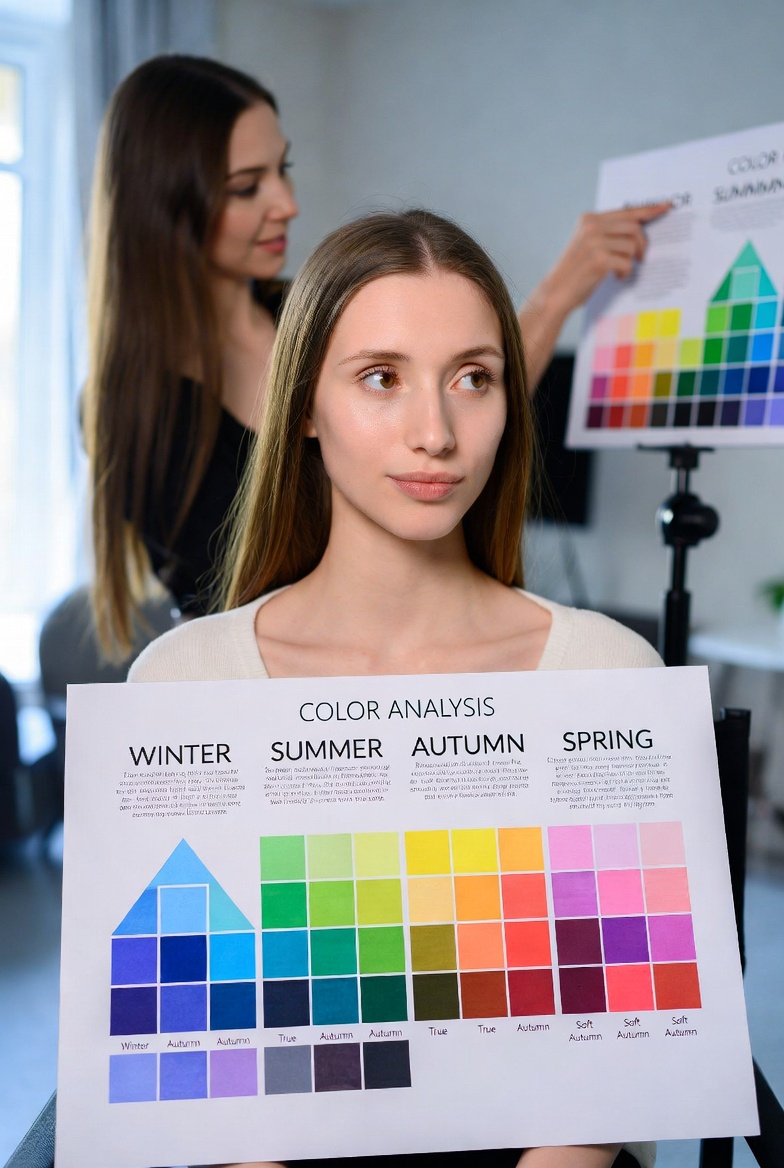
How undertone relates to seasonal color analysis
Undertone is one input. Seasonal analysis also considers:
- contrast (high vs low)
- chroma (bright vs muted)
That’s why two people with “warm undertone” can still land in different seasons.
What to do next
- If you want a quick guide to your season, start here: What season am I?
- See the output format first: View the demo report
FAQs
Can my undertone change?
Generally no. Tanning changes surface tone, not undertone.
What if I can’t tell?
That’s common. Neutral/olive is real, and the “best colors” signal is often clearer than the undertone label.